A hip fracture is a break of the upper end of the femur, right where it articulates with the pelvis. In the older adult a fall from standing height is enough to cause it, because the bone is already weakened by osteoporosis. In the young, by contrast, it takes high-energy trauma.
It is worth saying plainly: this is not “just another broken bone”. It is an event that changes the health trajectory of an older person, and the goal of treatment is to get them walking again as soon as possible, because every day in bed brings its own complications — pneumonia, thrombosis, pressure sores, cognitive decline, loss of muscle mass.
How it is recognised
Severe pain in the hip or groin after the fall, inability to bear weight and, frequently, the leg shortened and externally rotated. In undisplaced fractures the picture can be subtler: the person walks with pain and the initial radiograph looks normal. When clinical suspicion is high and the radiograph is inconclusive, CT or MRI is added — missing an occult fracture and letting it displace worsens the prognosis considerably.
Where the fracture is decides the treatment
The key distinction is not the name but the blood supply to the femoral head. The vessels that feed it run up the neck, so a fracture there can leave it without circulation.
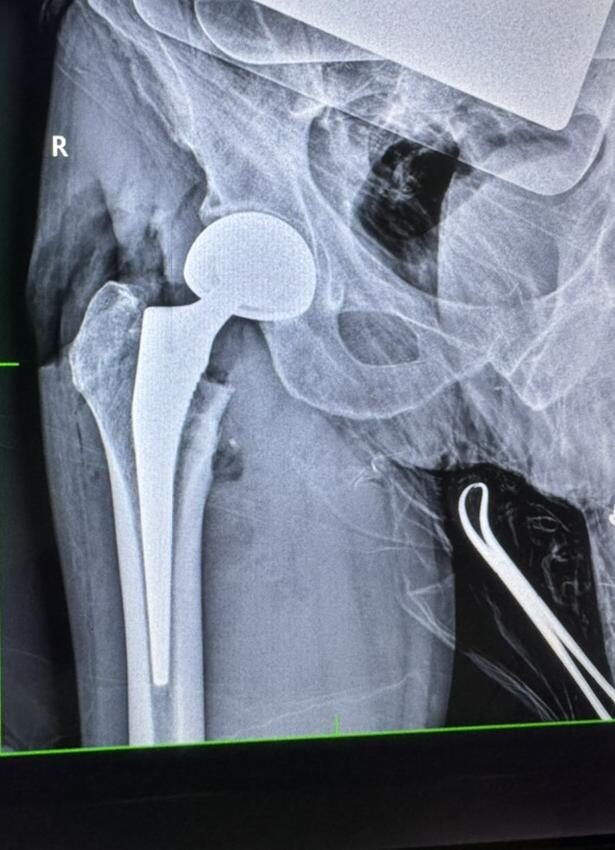
In fractures of the femoral neck that are displaced in an older patient, the risk of the head becoming necrotic is high, and so the usual approach is to replace it: hemiarthroplasty or total hip replacement, depending on previous function and the state of the acetabulum. Undisplaced fractures can be fixed, preserving the head.
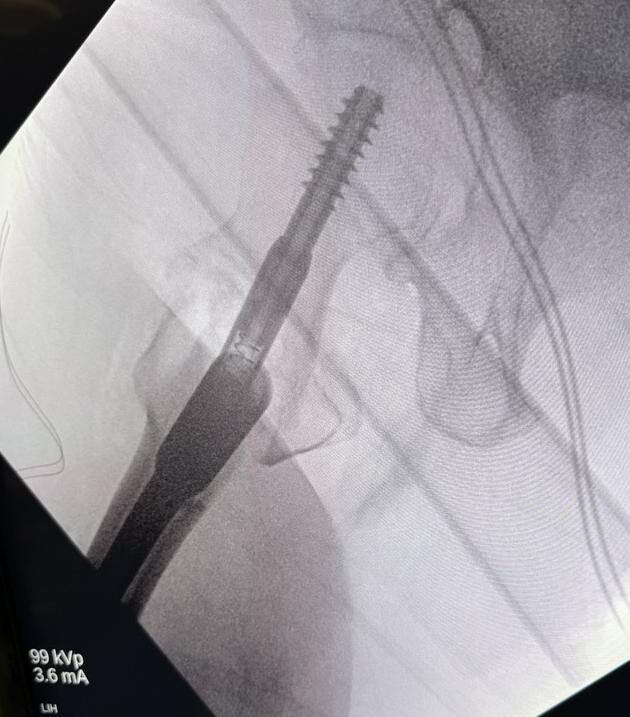
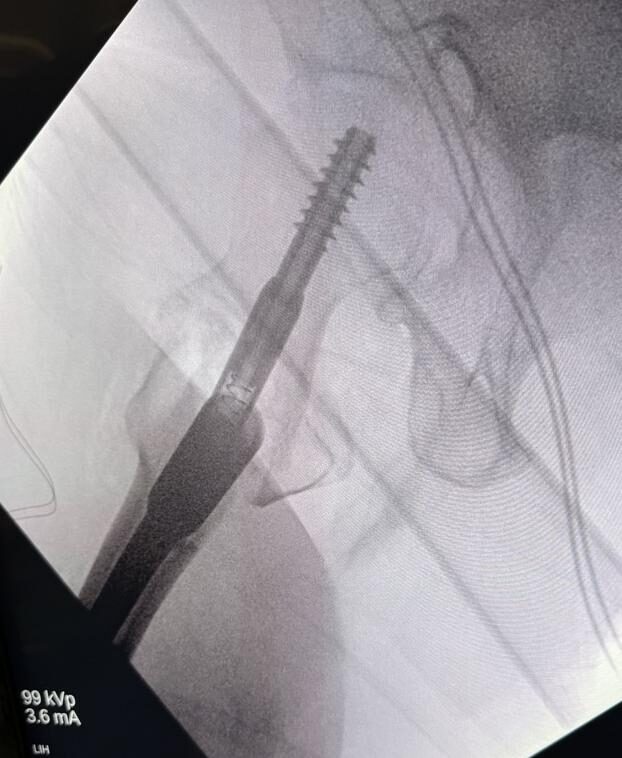
Fractures that are Intertrochanteric and subtrochanteric fractures occur lower down, in well-vascularised bone, and unite well: they are fixed with an intramedullary nail or a sliding hip screw. Nothing is replaced here; the fracture is stabilised to allow early weight-bearing.
How long can surgery wait
Surgery should be early, but it is worth knowing what the evidence showed. The international HIP ATTACK trial randomised 2,970 patients to accelerated surgery — aiming to operate within six hours — or to standard care. The median time to surgery was 6 hours versus 24. At 90 days there was no significant difference in mortality or in major complications.
The practical conclusion is not that waiting makes no difference. It is that the priority is to optimise the patient and operate without avoidable delay, not to race a six-hour clock. Time spent correcting anaemia, adjusting anticoagulation or stabilising cardiac decompensation is time well spent.
The part that gets forgotten: the second fracture
A fragility fracture is a warning. Anyone who has had one is at high risk of another, and yet most of these patients leave hospital without anyone investigating their osteoporosis.
Complete treatment includes assessing bone density, correcting vitamin D and calcium, starting antiresorptive treatment where indicated, and reviewing the risk of falls at home: loose rugs, lighting, footwear, medications that cause dizziness. That part prevents the next fracture, which is usually worse than the first.
Dr. Kushner’s approach: in hip fracture in the older adult, time counts. Operating early and choosing well between fixation and replacement is what returns the patient to their life and their independence.
Cases treated by Dr. Kushner
Radiographs from real cases treated by Dr. Kushner (de-identified images, used with consent).
Signs that mean going to the emergency department
- Being unable to bear weight after the injury, or visible deformity of the limb.
- Numbness, loss of strength, or cold or pale toes or fingers below the injury.
- Pain that grows out of proportion and does not respond to analgesia: this may indicate compartment syndrome.
- An open wound over the fractured area.
- Swelling that increases quickly, with tight, shiny skin.
Frequently asked questions
Can it be treated without surgery?
Very rarely. Prolonged immobility is dangerous in the older adult; surgery exists precisely to allow early mobilisation.
Fixation or replacement?
It depends on the fracture pattern, age and bone quality. Each case is decided individually.
Does it have to be operated on that same night?
Surgery should be early, but an international trial comparing operating within six hours against standard care found no reduction in mortality or major complications at 90 days. The priority is to stabilise the patient and operate without avoidable delay.
Why do some get a nail and others a replacement?
It depends on where the fracture is and on whether the blood supply to the femoral head is compromised, as well as on age and previous function. It is not a surgeon’s preference.
Can the next one be prevented?
Yes, and it is a part of treatment that gets neglected. After a fragility fracture, osteoporosis must be investigated and treated and the risk of falls reviewed.
References
- HIP ATTACK Investigators. Accelerated surgery versus standard care in hip fracture (HIP ATTACK): an international, randomised, controlled trial. Lancet. 2020;395(10225):698-708. DOI
Book your assessment
Book a consultation with Dr. Kushner at COMEDSA. Bring any previous imaging for a complete assessment.
Educational information reviewed by Dr. Michael Kushner Shrem. It does not replace an in-person medical assessment.