A periprosthetic fracture is the breaking of bone around a replacement already in place, whether of the hip or the knee. It is a growing problem, simply because more people are living longer with an implant in place.
What makes it different from an ordinary fracture is that there are two things to solve at once: the broken bone and the implant that was already there. And a single question organises the whole treatment: is the implant still well fixed, or has it come loose?
Why the bone breaks there
The implant is far stiffer than bone and concentrates load at its ends. Over the years the bone around the stem loses density — a phenomenon known as stress shielding. Add osteoporosis, implant loosening, osteolysis from wear or previous revision surgery, and a vulnerable zone is created.
The result is that a minor fall can fracture bone where healthy bone would not have broken. Most of these fractures occur through low-energy trauma in older people.
What to suspect after a fall
Sudden pain in the operated hip, thigh or knee, inability to bear weight, deformity or shortening. In some cases the pain preceded the fall, and that is an important clue: it suggests the implant was already loose and that the fracture is the consequence, not the cause.
The classification that decides treatment
For fractures around the femur with a hip replacement we use the Vancouver classification, which is not merely descriptive: it guides management directly. It takes into account where the fracture is, whether the stem is stable or loose, and how much bone remains.
The general principle, supported by the review literature, is clear: if the implant is well fixed, the fracture is fixed and the implant is kept; if the implant is loose, it must be revised, and the revision stem then also serves to stabilise the bone.
Determining implant stability is not always obvious on the radiograph. It is assessed by comparing with previous films, looking for radiolucent lines and stem subsidence, and it is sometimes confirmed in theatre.
How they are treated
With a stable implant, fixation uses locking plates and cable or cerclage systems that grip the bone without compromising the stem. The technique aims to respect the blood supply of the bone: in these patients, whose bone is already impoverished, an aggressive approach is counterproductive.
With a loose implant, it is revised with a long stem that bypasses the fractured zone and seats in healthy distal bone, adding graft where needed. It is a bigger operation and has to be planned with imaging and with the implants available before starting.
Non-operative treatment is reserved for undisplaced, stable fractures in patients who cannot tolerate an operation — and it demands very strict radiographic follow-up.
How they are prevented
A good proportion of these fractures are preventable, and that conversation is almost never had. Treating osteoporosis, reviewing the risk of falls at home, maintaining strength and balance, and checking the replacement periodically even when it does not hurt — loosening detected in time is revised as a planned procedure, which is far better than doing it as an emergency with the bone broken.
Dr. Kushner’s approach: periprosthetic fractures are among the most demanding injuries in orthopaedics because they combine trauma with replacement surgery. Choosing well between fixing the fracture and revising the implant makes the difference; my combined training in AO Trauma and joint reconstruction is dedicated precisely to this kind of case.
Cases treated by Dr. Kushner
Radiographs from real cases treated by Dr. Kushner (de-identified images, used with consent).
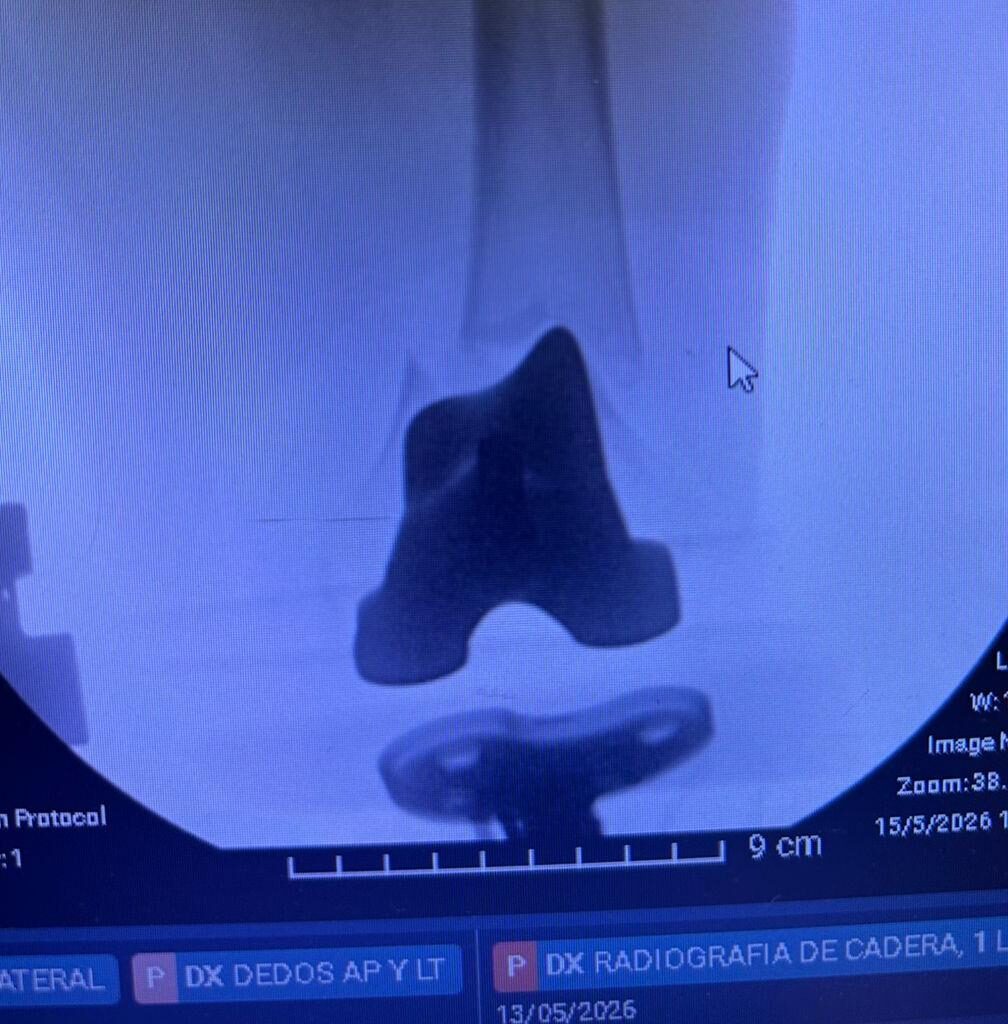
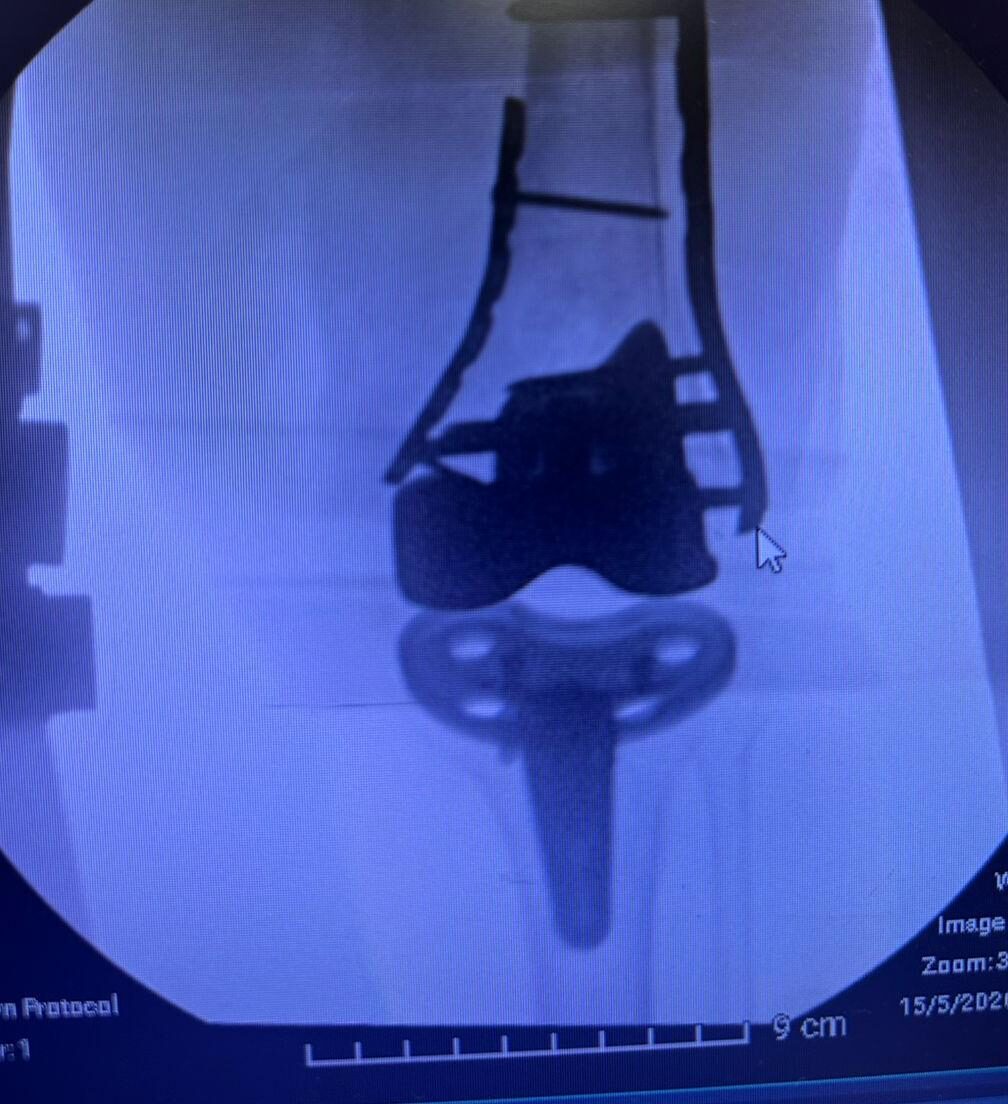
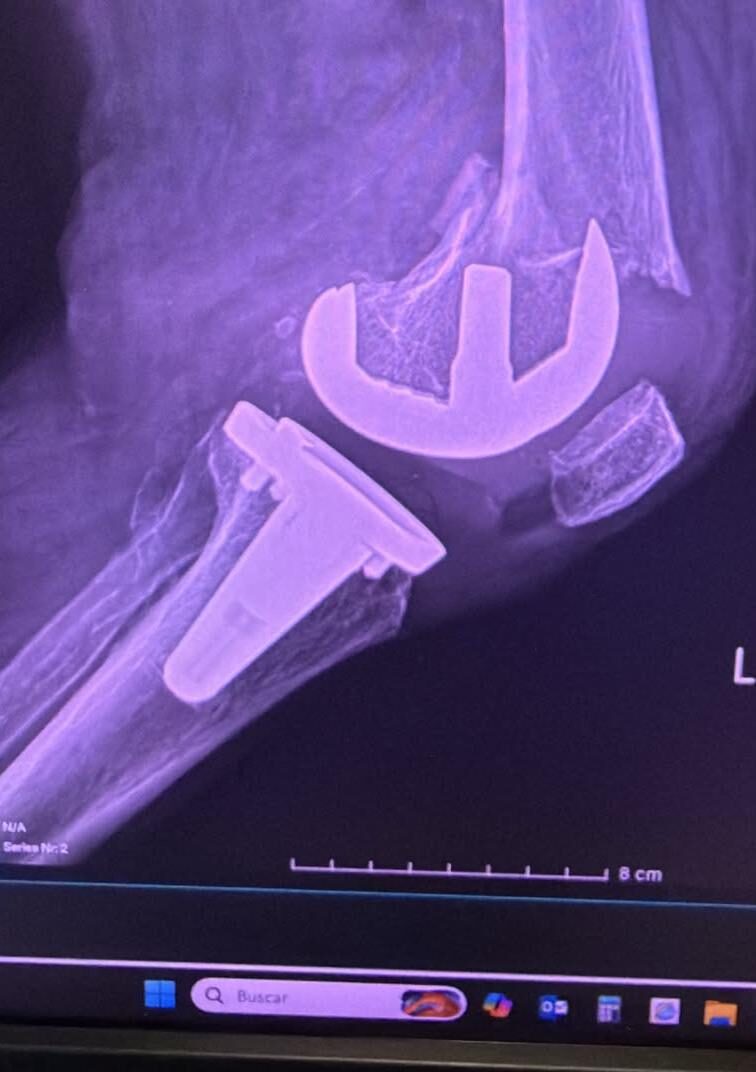
With a joint replacement in place, these are urgent
- Fever, redness, warmth or discharge from the wound — at any time, even years later.
- Pain that returns after a symptom-free period, or that changes in character.
- A sense that the hip is giving way or slipping when you bear weight.
- Inability to bear weight after a fall, even a minor one: this may be a fracture around the implant.
- Visible shortening of the leg or a change in the way you walk.
Frequently asked questions
Does the whole replacement have to be changed?
Not always. If the implant is still well fixed, it is kept and only the fracture is fixed. It is changed (revised) when the implant is loose or the fracture compromises it.
Will I walk again?
Yes. The aim of treatment is to restore stability so that walking can resume; recovery is progressive and depends on the type of fracture and the treatment.
Is the implant changed or the bone fixed?
It depends on whether the implant remained stable and on how much bone surrounds it. If the implant is firm, the fracture is fixed; if it is loose, it has to be revised. That decision is made with radiographs and in theatre.
Why does bone break around the implant?
Because the implant concentrates load at its ends and over time the neighbouring bone loses density. That is why a minor fall can fracture bone where healthy bone would not have broken.
Can they be prevented?
In part: by treating osteoporosis, reviewing the risk of falls and checking the implant periodically to detect loosening before it causes problems.
References
Book your assessment
Book a consultation with Dr. Kushner at COMEDSA. Bring any previous imaging for a complete assessment.
Educational information reviewed by Dr. Michael Kushner Shrem. It does not replace an in-person medical assessment.