The patient has pain, swelling and sometimes a "dinner fork" deformity of the wrist. It is assessed with radiographs; CT is reserved for fractures involving the joint.
Treatment depends on stability and displacement. Many well-aligned fractures are treated without surgery, with reduction and cast immobilisation plus follow-up radiographs to make sure they do not displace. Unstable, displaced or intra-articular fractures usually require surgery — usually a plate and screws — to restore the anatomy and allow early mobilisation of the hand.
Dr. Kushner’s approach: the wrist is a fine joint; small differences in alignment show up in daily life. Choosing well between cast and surgery, and not neglecting the follow-up radiographs, is what secures good function.
Cases treated by Dr. Kushner
Radiographs from real cases treated by Dr. Kushner (de-identified images, used with consent).
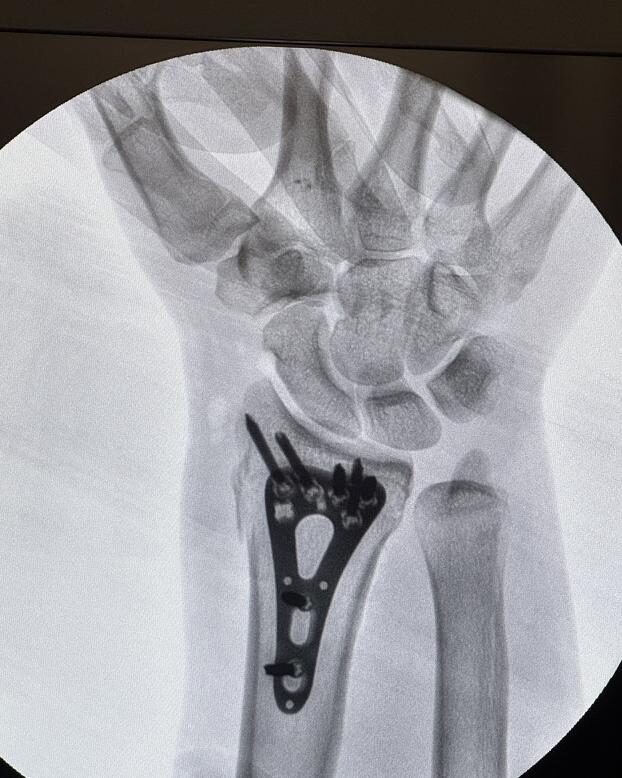
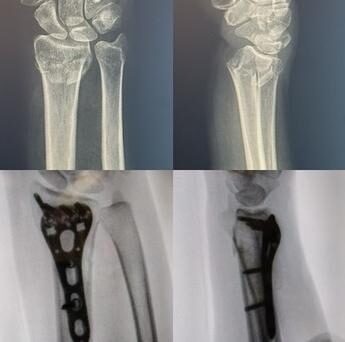
Signs that mean going to the emergency department
- Obvious deformity of the wrist, forearm or elbow after the fall.
- Numbness or tingling in the fingers, or difficulty moving them.
- A cold, pale or bluish hand or fingers.
- Pain that increases despite ice, elevation and painkillers.
- An open wound, or swelling that grows quickly with tight skin.
Frequently asked questions
Is surgery always needed?
No. Many are treated with reduction and a cast; surgery is for unstable, displaced or intra-articular fractures.
How long in a cast?
It varies with the fracture; what matters is the follow-up to confirm that alignment is holding and to start rehabilitation on time.
Cast or surgery?
It depends on displacement, on involvement of the articular surface, on age and above all on what you need to do with that hand. Many fractures in older people achieve a good functional result without surgery.
Will my wrist end up crooked?
Some prominence can remain without affecting function. What is corrected is deformity that compromises movement, strength or the joint surface.
How long is the recovery?
The bone unites in about six weeks, but regaining movement and strength takes considerably longer. Hand rehabilitation is part of the treatment, not an extra.
References
Book your assessment
Book a consultation with Dr. Kushner at COMEDSA. Bring any previous imaging for a complete assessment.
Educational information reviewed by Dr. Michael Kushner Shrem. It does not replace an in-person medical assessment.